Functional Medicine
Fertility



Functional Medicine
Fertility challenges are often complex which means standard investigations do not always provide definitive answers.
At Harpal Clinic our GMC-registered, hormone specialist doctors focus on improving the underlying biological environment that supports healthy conception and pregnancy. Whatever stage you are at in your health journey, we aim to provide clarity, support, and personalised care throughout.
We support patients across the UK with:
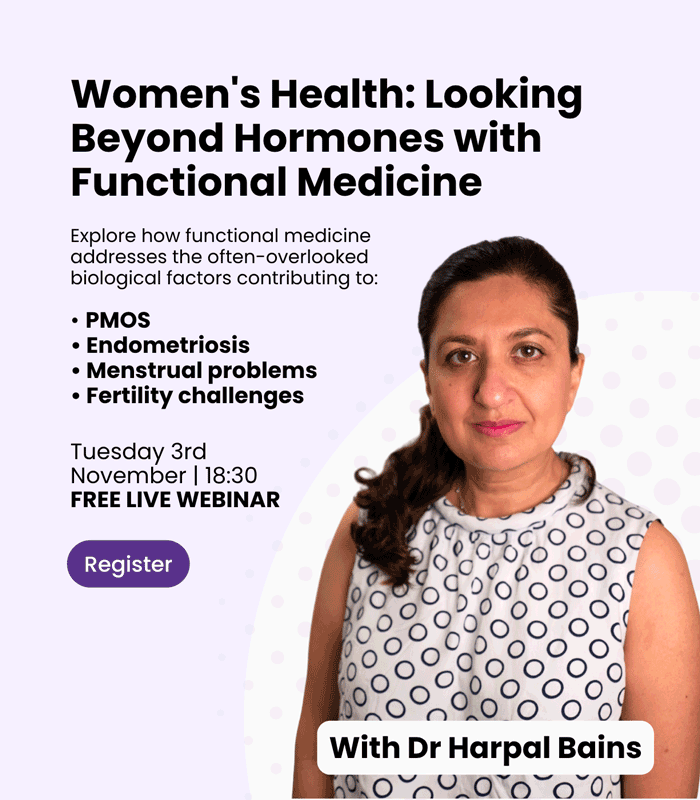
Date: Tuesday, 3rd November, 6:30pm
Cost: Free
Please note: This is a live event and is recorded
PMOS, endometriosis, menstrual problems and fertility challenges are often viewed primarily as hormonal conditions. But what if other biological systems are playing a much greater role than we realise? Join Dr Harpal Bains as she explores the value of a functional medicine approach, and what it can offer in understanding and managing these complex conditions.
What we will cover:
📋 A functional medicine approach: What is it and how does it work?
♀️ The role of hormones: How hormones contribute to PCOS, endometriosis, menstrual problems and fertility challenges.
👩🏼 Beyond hormones: Exploring the role of immune function, inflammation, metabolic health and gut health in women’s health conditions.
🩺 Long-term health: Why understanding these complex interactions can support more personalised and effective care.
💙 The emotional impact: How stress, societal expectations and the pressures placed on women can influence their health.
📖 A real-life case study: How investigating the wider picture can reveal important connections.
❓Question time!
👩🏽⚕️ Complimentary 10-minute 1-2-1 mini consult with Dr Bains

Functional medicine is a well-established evidence-based approach focused on identifying and addressing the underlying biological factors influencing health.
When applied to fertility, this means looking beyond the reproductive system alone to understand how different systems within the body can influence your ability to conceive and maintain a healthy pregnancy.
This may include assessing:
We focus on supporting the underlying biological conditions that contribute to healthy conception and pregnancy, whether naturally or in tandem with fertility treatment. We can work alongside your fertility clinic or NHS care where appropriate.
In fertility
‘unexplained’ is rarely the end of the story.
‘unexplained’ is rarely the end of the story.
It often reflects the depth of investigation rather than the absence of a cause.
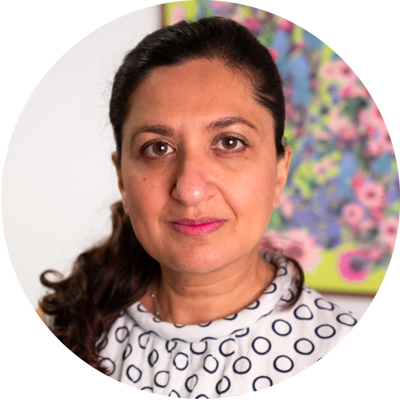
Dr Harpal Bains
MBBS, DFSRH, PGCAestMed (Dist)
You may find a functional medicine approach to fertility useful if:
The main difference between our consultation options is the level of clinical depth, time with your doctor and number of tests that are interpreted. Your package fee reflects the extensive clinical process, analysis of multiple data points, and in-depth consideration of your symptoms and health history, not simply the time spent in the consultation room.
If you don’t feel like you’re ready for a doctor consultation, you can start with targeted nutrient support through our IV team, who work closely with our medical doctors. IV therapy supports nutrient optimisation, either as a starting point or alongside your doctor’s wider fertility plan.
You don’t have to know exactly what you need, our team will help you understand what will work best for you in a discovery call.
If you choose a doctor consultation, we take a structured and hyper-personalised approach.
Your doctor will begin by building a clear picture of your fertility history, health history, and any previous investigations. From this, your doctor will begin to identify which key factors may be influencing your fertility and advise which tests are most suitable.
We offer a structured, evidence-based evaluation, and are clear about which investigations are well established, which are more advanced, and which are used selectively depending on your situation.
Your recommended testing may be assessing key hormone and fertility blood markers to help identify areas such as hormonal imbalance (for example, low progesterone or thyroid dysfunction) or low AMH levels. Blood testing can also provide insight into your metabolic health, inflammation, and nutrient status.
Where relevant, we may expand into more detailed investigations, including DUTCH testing (such as cycle mapping), vaginal or gut microbiome analysis, and assessment of environmental exposures such as toxins as well as detoxification. In some cases, we also explore mitochondrial function and genetic factors that may influence hormone metabolism, detoxification, and inflammation.
Your doctor will prioritise what is most clinically relevant to you, with the option to expand into further testing.
Nutrition is integrated into your care from the outset using personalised diet and supplement recommendations from your doctor as part of your wider personalised plan. Where more detailed support is needed, we can also provide additional input from our in-house nutritional therapists.
For many patients, supporting conception and pregnancy begins with optimising the nutritional foundations that support hormone balance, egg quality, sperm health, mitochondrial function and implantation. Your doctor may recommend IV therapy, however this can be done independently of a doctor consultation. This may include improving baseline levels of key nutrients using targeted IV nutrient therapy.
Popular options include NAD+ therapy, often used ahead of IVF, for which our medical team developed an evidence-based protocol, vitamin D optimisation as well as other IV nutrients such as selenium, vitamin C or zinc.
We may include a combination of the following where applicable to your individual treatment plan:
Understanding the ‘why’ behind infertility is at the heart of what we do. Identifying the factors influencing your fertility lead to a more personalised, targeted, and effective treatment approach.
Fertility research is evolving rapidly, particularly in areas such as reproductive ageing, mitochondrial function, egg quality, sperm DNA integrity, the reproductive microbiome, and the role of environmental and inflammatory stressors.
Our approach reflects this shift. We continuously review emerging research and, where clinically appropriate, incorporate these insights into how we assess and support fertility, while remaining clear about what is well established and what is still developing.
It’s no longer just about the ‘biological clock’; increasingly, fertility is understood not only in terms of age, but in relation to the biological environment that supports egg, sperm, and embryo health.
In some cases, we may consider selected treatments or interventions where there is a clear clinical rationale, while remaining transparent about the level of supporting evidence.
How does LDN help fertility? LDN is an off-label medication sometimes used to support immune and inflammatory regulation. It may be considered in specific clinical contexts where appropriate.
You can learn more here.
NAD+ plays a key role in cellular energy and mitochondrial function, both of which are important for egg quality. Levels naturally decline with age, and this has led to growing interest in its role in reproductive ageing and fertility.
You can learn more here.
Functional medicine is a systems-based and personalised medical approach used to help understand the underlying biological factors that may be contributing to chronic or complex health concerns.
Within fertility care, this means looking beyond the reproductive system alone to assess the wider factors that may influence reproductive health and fertility outcomes. This can include areas such as sex hormone balance, thyroid, metabolic health, inflammation, immune function, nutrient status, gut health, vaginal health, sleep, cortisol (stress), and lifestyle factors, recognising that fertility is often influenced by multiple interacting systems rather than a single issue alone.
In many cases, yes.
Lots of women are told their fertility is “unexplained,” which can sometimes reflect the limits of investigations up until that point, rather than the absence of contributing factors. “Unexplained” does not mean that no help is available or that your fertility journey has come to an end.
Our approach looks more broadly at the systems that influence fertility, helping to identify areas that may not yet have been fully explored and ensuring that key aspects of your health are working optimally to support conception.
Many of the individual areas we assess, such as hormone balance, metabolic health, inflammation, and nutrient status, are well established as being important for fertility. The individual principles, biological systems, and interventions used within functional medicine are supported by peer-reviewed medical research.
The distinct areas we assess, such as hormone balance, metabolic health, chronic inflammation, and nutrient status, are well established in conventional medicine as critical pillars for healthy conception and pregnancy. Rather than treating these factors in isolation, a functional medicine approach brings them together in a comprehensive, personalised way
Importantly, functional medicine is not intended to replace conventional fertility treatment, particularly where structural or significant medical factors are involved, such as blocked fallopian tubes or other anatomical or reproductive conditions requiring specialist care. Instead, it is often used alongside conventional fertility treatment to help support the wider biological environment involved in fertility.
We focus on supporting the body’s natural physiology and all of the systems that underpin fertility. It is often considered a natural approach as we look at the body holistically and assess multiple systems at once, providing a treatment plan that considers targeted supplementation, diet, bioidentical hormones, lifestyle changes, or medication where applicable.
For those that require bioidentical hormones, these support specific areas in a way that works in alignment with your physiology. They are usually from a natural source, are molecularly the same as your body produces, and are often just the hormone with olive oil in a natural capsule. This approach can be used on its own or alongside conventional fertility care.
For many women, optimising fertility often begins independently, reviewing diet, supplements, or lifestyle factors. If conception doesn’t happen, the next step is usually through a GP or fertility clinic, where testing such as hormones and AMH are used to assess reproductive function and guide treatment.
Our approach is different to these steps, but designed to complement them. Using advanced functional medicine testing, we focus on supporting the underlying biological conditions that contribute to healthy conception and pregnancy, whether naturally or alongside fertility treatment. We can also work alongside your fertility clinic or NHS care where appropriate.
This may include assessing areas such as:
We can support you at any stage of your journey, whether you are:
In many cases, gaining a clearer understanding of key areas that impact fertility, such as; hormone balance, metabolic health, nutrient status, vaginal health and inflammation from the outset can help identify and address factors that may be influencing your fertility on a personalised level.
Taking this approach can help create a more supportive biological environment for conception.
Yes, fertility can often be improved naturally. We focus on supporting the body’s natural physiology and all of the systems that underpin fertility.
It is often considered a natural approach as we look at the body holistically and assess multiple systems at once. How can I support my fertility naturally is a question we are often asked. Investigations are a key starting point, as they provide detailed insight into the areas that may be impacting your fertility. Support typically includes targeted dietary guidance, tailored supplementation, and lifestyle adjustments designed to optimise the body’s natural physiology and reproductive function.
Where appropriate, treatment may also include bioidentical hormones. These are usually derived from natural sources and are structurally identical to the hormones your body produces, and can be used to support or restore hormonal balance when needed, for example where we see low progesterone levels.
In some cases, other types of prescriptions are recommended where there is a clear medical need. This is to address an underlying issue that may be affecting your fertility. This is integrated into your overall plan alongside natural interventions.
Egg quality is a complex area and there has been an increase in research in recent years, looking into the factors that influence it.
It is well established that egg quality is affected primarily by age, but it can also be impacted by underlying biological factors such as mitochondrial function, hormone balance, inflammation, nutrient availability, and the body’s overall internal environment.
While we cannot guarantee egg quality outcomes, but our approach focuses on supporting these underlying factors to help create the most favourable conditions to support egg quality.
Yes. We work with women in their mid-late 30s who are not yet trying to conceive but want a clear, realistic understanding of their fertility and how to optimise it over time.
This typically involves assessing key markers such as ovarian reserve (AMH), hormone balance, and ovulation, alongside broader factors that influence fertility, including metabolic health, nutrient status, and inflammation.
The aim is to give you a data-led view of where you are now, as well as a personalised plan to support your fertility over the coming years. For some, this helps inform decisions around timing, egg freezing, or when to start trying. For others, it provides reassurance and a structured approach to maintaining and optimising fertility in the background.
This is very common. Generic approaches are not always effective because they are not based on your individual biology and test results. Our approach uses advanced testing and clinical interpretation to identify what is specifically relevant for you, rather than applying broad recommendations.
This helps ensure that any interventions are targeted and clinically appropriate.
This depends on the areas being addressed, but in many cases we work in treatment periods of around 3 months. While women are born with all of their eggs, each egg undergoes a final stage of growth and maturation during the months leading up to ovulation.
This process takes approximately 3 months, which is why interventions aimed at supporting egg quality are typically implemented over this timeframe. Other areas, such as nutrient status, metabolic health, and hormone balance, can begin to improve sooner, but meaningful changes in reproductive outcomes are often assessed over a few months.
For patients preparing for IVF, we typically recommend allowing around 60-90 days for targeted optimisation. In some cases, IV nutrient therapy (including NAD+) can be used during this period. We also see patients who opt for more short-term support in the weeks leading up to stimulation, where timelines are more limited.
Your plan will always take into account your individual timeline, whether you are trying naturally or preparing for treatment such as IVF.
Many patients begin with a discovery call with our health specialist, who can help you understand the most appropriate starting point based on your situation.
They will help to guide you towards the most appropriate next step based on your goals, timeline, and where you are in your fertility journey.
In terms of making a booking, if you are looking for a more in-depth medical assessment, we typically recommend starting with a Focussed or Comprehensive package with one of our doctors. Others prefer to begin with nutrient optimisation, for example, addressing vitamin D levels or starting IV therapies ahead of IVF treatments, such as NAD+.
Implantation depends on multiple factors, including hormone balance, endometrial health, immune function, and overall physiological environment.
Our approach focuses on supporting these underlying systems to help create the most favourable conditions for implantation.
This is very common.
Normal results do not always mean that everything has been investigated, nor does it mean that everything is optimal for conception. Standard investigations often focus on baseline markers, which can be helpful for identifying clear abnormalities, but do not capture every factor that can influence fertility.
In some cases, a broader and more personalised assessment can help identify areas that have not yet been explored. We look more closely at these factors to better understand what may be influencing your fertility.
You may have completed testing already with your GP or been referred to a specialist and completed testing with them which our doctors can review. We offer blood testing as well as more advanced functional testing, depending on your situation and also what you have had tested already.
For those with no testing so far, initial testing with us often includes key hormone and fertility blood markers, helping to identify areas such as hormonal imbalances (e.g., progesterone or thyroid function) or ovarian reserve (AMH). Blood testing can also provide valuable insight into metabolic health, inflammation, and nutrient status.
Functional testing for fertility can include:
Your doctor will prioritise what is most clinically relevant for you, and you can decide which recommendations you would like to go ahead with.
Please note that our testing is adjunct to primary care testing.
No. Testing is always advised based on what is most clinically relevant for you and what you would like to go ahead with.
Some patients benefit from a more focused approach looking at a few selected blood markers to begin implementing a fertility health plan. Others may choose more comprehensive testing depending on their history and how long they have been trying to conceive.
You are always guided through what is most important, and you can decide which investigations you would like to proceed with. The decision is in your hands.
No. Your primary fertility care and timeline always come first.
We work around your existing plan, whether that involves NHS care or treatment with a fertility clinic. Any support we provide is designed to fit alongside what you are already doing, not delay it.
Our role is to support your fertility in a way that works with your current treatment plan.
All testing can be arranged remotely and is designed to be as straightforward as possible.
Depending on your plan, this may include a combination of:
We send all required kits directly to your home, with clear instructions for collection and return. For blood testing, you will be guided on where to book locally, and which tests need to be taken at specific times in your cycle, if relevant.
Your doctor will ensure that all testing is appropriate for your situation and prioritised to avoid anything unnecessary.
Some fertility tests do need to be timed to specific points in your cycle, particularly hormone testing.
If this applies, we will give you clear instructions on exactly when to test, so results are accurate and meaningful. Many other tests, such as nutrient levels, gut health, or DNA testing, can be done at any time.