Functional Medicine
Endometriosis



Functional Medicine
Have you been told there’s no known cause or cure for endometriosis?
Hearing this can feel disempowering, especially when you’re still dealing with ongoing pain, brain fog, disrupted sleep, fatigue, or symptoms that are affecting your day-to-day life and don’t feel fully explained or controlled.
At Harpal Clinic, we use a functional medicine approach to identify the underlying causes and what is driving your condition. Endometriosis is a complex, multi-system condition, involving hormonal, immune, and inflammatory processes that interact with one another. Our aim is to build a plan that improves your symptoms and improves your quality of life while also supporting long term management of your condition.
Endometriosis is common, yet diagnosis is often delayed (the average time to diagnosis in the UK is 9 years 4 months). In addition, endometriosis symptoms are frequently misunderstood. Pain may be initially dismissed as being ‘normal’ or not taken seriously, managed without deeper investigation, or treated in isolation, leaving you without a clear explanation for what you’re experiencing.
If you’ve been told that your endometriosis has an unknown cause or no cure, you may be feeling like this is very final. However, this does not mean the condition is unexplained, nor does it mean that it is untreatable.
Some medical models in healthcare try to find a single, clearly defined cause and a corresponding cure. When a condition does not fit that model, it is often labelled as having an unknown cause or cure.
With endometriosis, multiple biological processes are well established, including hormonal, immune, and inflammatory mechanisms that interact with one another which can fluctuate, overlap, or change over time. These interconnected drivers help explain how the condition develops and also how it persists. Understanding these mechanisms creates opportunities for more targeted and personalised approaches to care.
We’re not anti-conventional care, but we are also not limited to it. We can bring you a
clearer understanding
clearer understanding
of what drives endometriosis and what can be done about it.
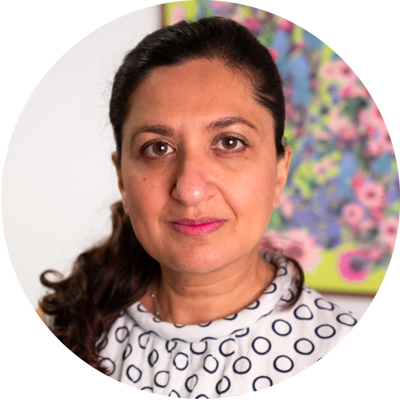
Dr Harpal Bains
MBBS, DFSRH, PGCAestMed (Dist)
Functional medicine is a well established medical approach focused on identifying and addressing the underlying biological factors influencing health.
There usually isn’t one single cause of endometriosis. The following can contribute to the development and progression of endometriosis:
We address these factors in a structured way so your treatment is clinically informed and targeted to you.
Our role is to identify which of the biological processes driving your endometriosis are most relevant in your case, and then target them directly in a structured and clinically informed way.
This can involve:
Nutrition for endometriosis
Nutrition can integrated into your care from the outset using personalised supplement recommendations and dietary changes where needed. Where more detailed support is appropriate, we can also provide additional input from our in-house nutritional therapists.
The main difference between our consultation options is the level of clinical depth, time with your doctor and number of tests that are interpreted. Your package fee reflects the extensive clinical process, analysis of multiple data points, and in-depth consideration of your symptoms and health history, not simply the time spent in the consultation room.
You don’t have to know exactly what you need, our team will help you understand what will work best for you in a discovery call.
LDN is an off-licence treatment being explored as a supportive option in endometriosis.
While endometriosis-specific research is still limited, LDN has been studied more broadly in chronic pain and inflammatory conditions. Clinical experience and early studies suggest it may be a useful supportive option, particularly when pain is a primary concern.
Unlike conventional painkillers, LDN works through a different mechanism to:
This makes it particularly relevant in endometriosis, where chronic inflammation and altered pain signalling are key features.
For many women, particularly those struggling with ongoing pain, this can offer an additional option particularly when other approaches have not been sufficient or well tolerated.
We provide LDN wherever you are in the UK, no GP referral or diagnosis letter required.
Before we can prescribe LDN, a 30-minute medical consultation is required. This allows your doctor to assess your medical history, discuss your symptoms and goals, and determine if LDN is appropriate and safe for you.
Includes:
Please note: This non-refundable fee covers your doctor’s time, expertise and guidance. It applies whether or not you proceed with our LDN monthly membership.
Looking to explore your health more deeply?
We offer our Focussed and Comprehensive packages that allow you to explore wider health concerns beyond LDN. Your doctor can advise if this might be appropriate for you. Your initial consultation fee can be credited towards this.
If you’re a good candidate for treatment, we will invite you to join our monthly LDN membership programme.
Includes:
Endometriosis is a condition where tissue similar to the lining of the womb grows outside of the uterus.
The endometrium-like tissue is most commonly found in the pelvic area, such as the ovaries, fallopian tubes, and lining of the pelvis, but it can also affect other areas of the body. In some cases, endometriosis has been found in and around the bowel, bladder, diaphragm, and more rarely, areas outside the abdominal cavity.
While it was often thought of primarily as a gynaecological or hormonal condition, endometriosis is now recognised as involving multiple interconnected biological processes and systems, including:
These systems interact with each other, which is why symptoms can vary significantly between individuals and are not always fully explained by one single cause.
Symptoms can vary between individuals, but commonly include:
For many women, it’s not just one symptom – it’s many. And the ongoing impact of these on day-to-day life can become difficult to manage.
While endometriosis is often associated with pelvic pain, many women experience a much broader impact on their day-to-day health and quality of life.
Fatigue in particular is often overlooked, despite being one of the most disruptive symptoms for many women. This is partly because endometriosis involves more than the endometriotic lesions themselves. Chronic inflammation, hormonal changes, immune system activity, altered pain signalling, and the ongoing physical and mental strain of managing symptoms can all contribute to how someone feels day-to-day.
As a result, endometriosis can affect:
For many women, it’s not just one symptom – it’s the cumulative effect of multiple ongoing symptoms over time.
While endometriosis treatments such as surgery, hormone-based interventions, and pain relief strategies can be very helpful, it is still surprisingly common to experience ongoing symptoms despite having had treatment.
This is partly because endometriosis is not driven by a single mechanism alone. The condition can involve chronic inflammation, local hormone production, altered hormone signalling, increased oestrogen activity within lesions, immune system dysfunction, altered pain signalling, fatigue, gut symptoms, and the development of fibrosis or scar tissue.
Symptoms and severity can also vary significantly between individuals, as can the biological processes driving them.
As a result, many women benefit from a more personalised approach that looks beyond symptom suppression alone. When it comes to treating endometriosis, our functional medicine approach aims to identify the key factors most relevant in your case and address them in a structured and targeted way, alongside any existing medical care.
This may include looking at areas such as inflammation, hormone balance, immune function, gut health, nervous system involvement, nutritional status, and other factors that may be contributing to how symptoms present and persist over time.
Fatigue is one of the most common and disruptive symptoms experienced by women with endometriosis, yet it is often overlooked.
This is partly because endometriosis involves more than pelvic pain alone. The condition can be associated with chronic inflammation, immune system activation, hormonal imbalance, disrupted sleep, ongoing pain signalling, and the physical stress of managing symptoms over time.
In some women, factors such as nutrient deficiencies, gut issues, heavy periods, or poor sleep quality may also contribute.
As these processes often overlap, fatigue in endometriosis is rarely caused by one single factor alone.
This is why many women benefit from the broader, more systems-based approach that we offer. This looks at the different factors potentially contributing to low energy and ongoing exhaustion, rather than viewing fatigue as something separate from the condition itself.
Gut symptoms are often an important part of understanding the wider picture of endometriosis, rather than something completely separate from the condition itself.
Bloating, constipation, diarrhoea, nausea, or changes in bowel habits are very common in women with endometriosis.
From a functional medicine perspective, the following may contribute to ongoing gut symptoms:
In some women, these processes may also overlap with conditions such as IBS or Small Intestinal Bacterial Overgrowth (SIBO).
Do you want to know the best treatment for endometriosis? It’s the one that fits you, the underlying causes of your conditions, and the drivers of it.
Treatment at Harpal Clinic is personalised and depends on your symptoms, medical history, current treatments, and the biological processes most relevant in your case.
Our aim is to understand what may be driving your symptoms and build a structured plan that directly addresses these.
This may involve:
Depending on your individual needs, treatment may include a combination of:
Harpal Clinic has been established since 2012 and has supported thousands of patients with complex hormone and chronic health conditions during that time.
Our medical team of GMC-registered doctors has extensive experience in women’s health, hormone medicine, functional medicine, and complex chronic conditions, with over 40 years of combined experience across these areas.
Several of our doctors trained in functional medicine, in addition to advanced training in hormone health, women’s health, and integrative medicine.
Our doctors regularly attend leading medical and functional medicine conferences, helping us continually refine and update our approach using the latest evidence-based research and clinical developments. Our aim is not simply to provide advice, but to help you build a clearer understanding of your condition and a realistic, long-term plan for managing it.
Our wider clinical and patient care team have backgrounds and training in nursing, nutrition, hormone health, functional medicine, and chronic disease support.
Yes. LDN can be prescribed where appropriate following a medical consultation. We also offer a dedicated LDN membership programme for patients seeking this treatment specifically.
Not always. The need for testing depends on your symptoms, medical history, previous investigations, and the type of support you are looking for. Your doctor will consider all of these factors and let you know what would be most beneficial for you.
Our approach is not to test everything routinely, but to use investigations selectively and strategically where they are most likely to provide useful information and meaningfully guide treatment.
Where appropriate, testing may be used to help identify factors contributing to symptoms or disease progression.
This can include areas such as:
In some cases, treatment can begin without testing, such as with LDN.
Yes. Previous blood tests, scans, surgical reports or other investigations can often be very helpful in allowing your doctor to understand the wider picture of your health and how your condition has been assessed or managed so far.
Where appropriate, we encourage patients to send through any relevant previous results so these can be reviewed during the consultation and, most importantly, when your doctor is preparing your report and treatment plan.
For some prescription treatments (such as hormones), more recent testing may be needed to ensure treatment is appropriate and safe. In these cases, results are generally required from within the last 3 months to allow for an accurate clinical assessment.
Yes. Consultations can be conducted online, by phone, or in-clinic.
Testing can be arranged at our London clinic or through partner providers closer to your home address.
We can also send test kits directly to your home for you to arrange a local phlebotomy appointment where needed. Some investigations, such as certain stool or urine tests, can also be completed entirely from home.